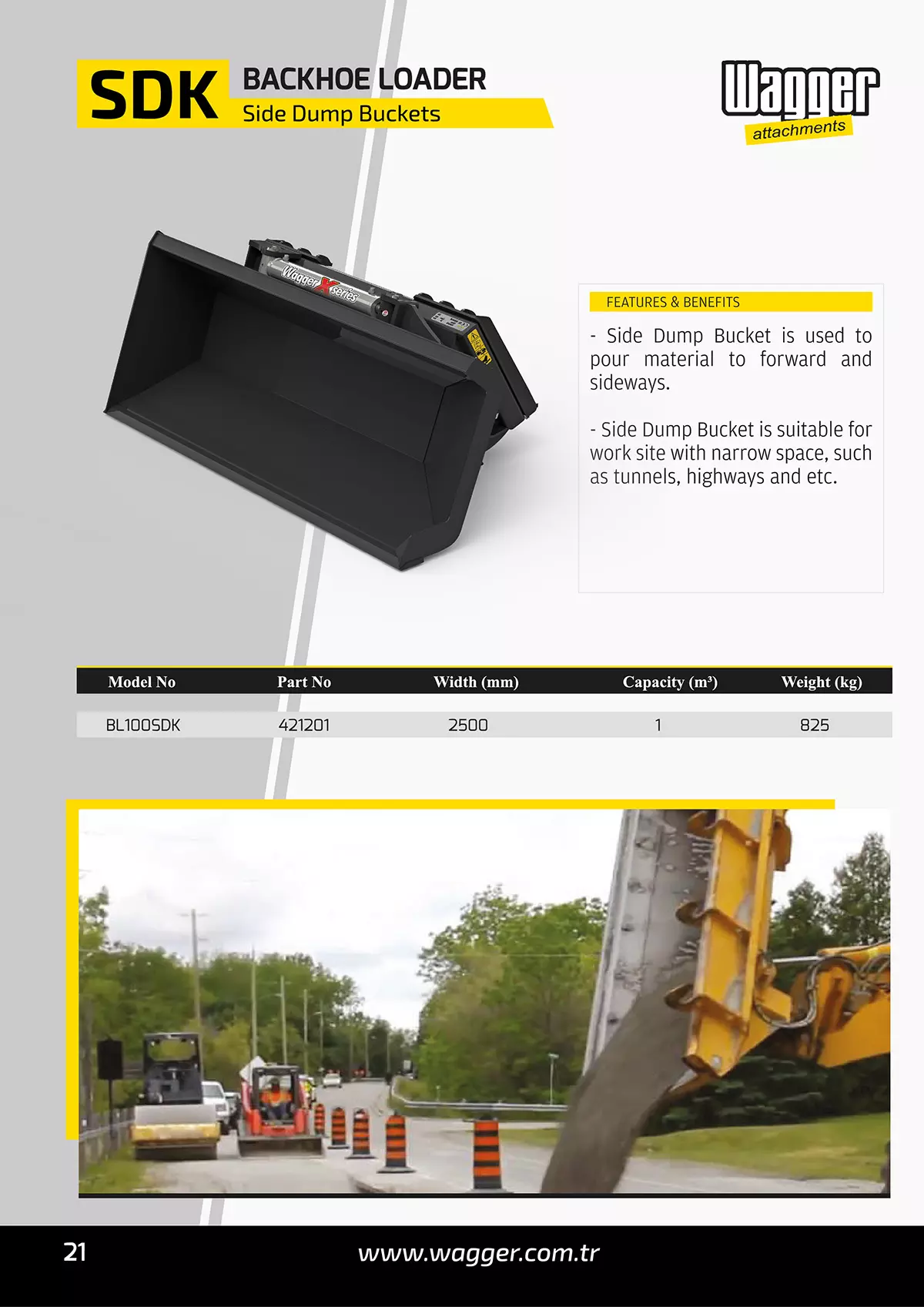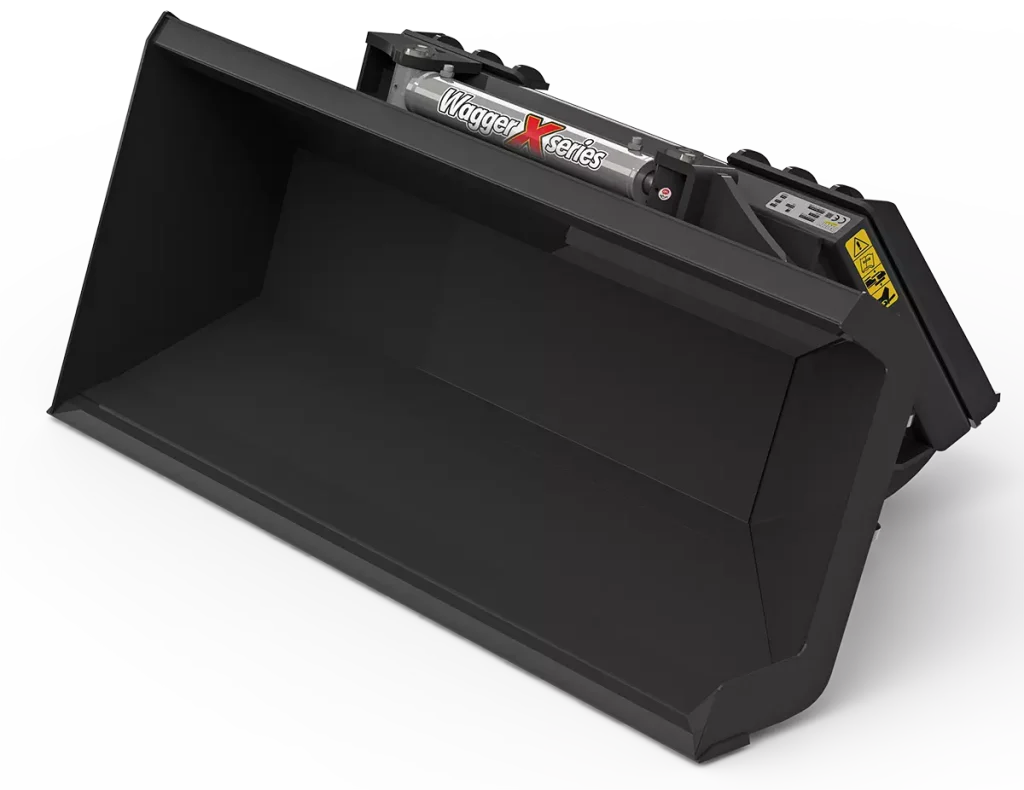
Wagger SDK Side Dump Bucket: Maximum Maneuverability in Confined Spaces
The Wagger SDK Series is a professional side-dump solution specifically developed for backhoe loaders and wheel loaders working in tunnels, narrow road construction, and job sites with restricted maneuvering space. Unlike standard buckets, its ability to discharge the load both to the front and to the side eliminates the need for the machine to perform constant maneuvers.
Key Features
- Dual-Directional Discharge Flexibility: Thanks to powerful hydraulic cylinders, the bucket can tilt to the right (or left, depending on the model) relative to the chassis, allowing material to be emptied into a side truck or trench.
- Maneuver Savings: The machine does not need to turn 90 degrees to discharge its load on narrow roads; this saves fuel, minimizes tire wear, and reduces cycle times.
- Robust Locking Mechanism: The hydraulic locking system, which secures the bucket to the main frame during normal loading operations, provides stable and safe transport performance.
- Heavy-Duty Chassis: Features an extra-reinforced joint and body structure designed to withstand torque and changes in the center of gravity that occur during side-dumping.
- Wear-Resistant Blade: A long service life is ensured by a cutting-edge structure manufactured from high-strength steel for scraping and loading hard materials.
Application Areas
- Tunnel and Gallery Construction: Rapid excavation removal in underground works where wide maneuvering space is unavailable.
- Road Construction and Narrow Street Works: Filling trenches or loading trucks while standing parallel to the edge of the road without obstructing traffic.
- Railway and Sewerage: Precise side-spreading of materials along railway tracks or canals.
- Dam and Infrastructure Projects: Controlled discharge of fill material on narrow working platforms.
Why Choose the Wagger SDK Side Dump Bucket?
The SDK Series increases operational speed by up to 40%. By reducing the machine’s forward-backward and turning movements, it eases traffic on the job site and enhances occupational safety. It transforms loading operations that seem “impossible” in confined spaces into a standard procedure.